
The modern kitchen has undergone a quiet revolution. Where countertops once hosted purely utilitarian gadgets, they now serve as stages for personal expression, artistic experimentation, and lifestyle storytelling. At the heart of this transformation is the humble slow cooker. Once relegated to back cabinets and weekend meal prep, the slow cooker has emerged as a canvas for imaginative design. Today, a new wave of conceptual appliances is redefining what kitchen tools can look like, how they can feel, and what they can represent. These unique slow cookers are not mass-produced commodities; they are artistic explorations, design studies, and creative tributes to the passions that shape our lives. From vintage automobiles to pop culture icons, these themed concepts prove that cooking can be as visually captivating as it is nourishing.
The Evolution of the Slow Cooker: From Utility to Expression
For decades, the slow cooker was defined by its function: a ceramic pot, a heating element, a simple dial, and a predictable outcome. Its design prioritized efficiency over aesthetics, resulting in appliances that blended into the background of the kitchen. But as interior design culture has shifted toward personalization and visual harmony, the demand for appliances that reflect individual taste has grown exponentially. Designers, industrial artists, and culinary enthusiasts began asking a simple question: Why should the tools we use every day lack personality? The answer has arrived in the form of themed slow cookers. These conceptual designs merge culinary function with sculptural art, transforming everyday cooking into an experiential ritual. It is important to note that these are design concepts and artistic visions rather than commercially available products. They exist to inspire, to challenge conventional appliance aesthetics, and to demonstrate how form and function can coexist in unexpected ways. By reimagining the slow cooker through the lens of automotive culture, fandom, humor, and nostalgia, these concepts open a dialogue about what kitchen technology could become when creativity takes the driver’s seat.
Automotive-Inspired Concepts: When the Road Meets the Kitchen
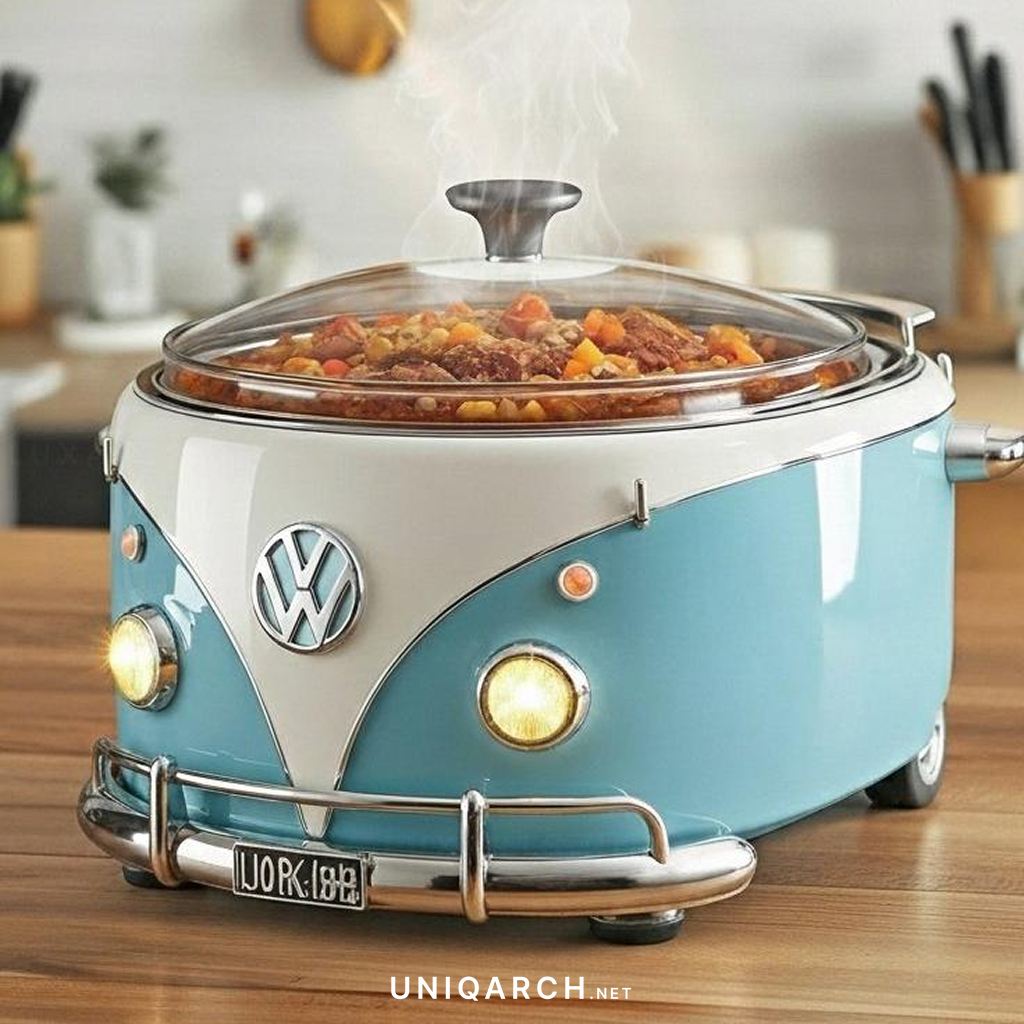
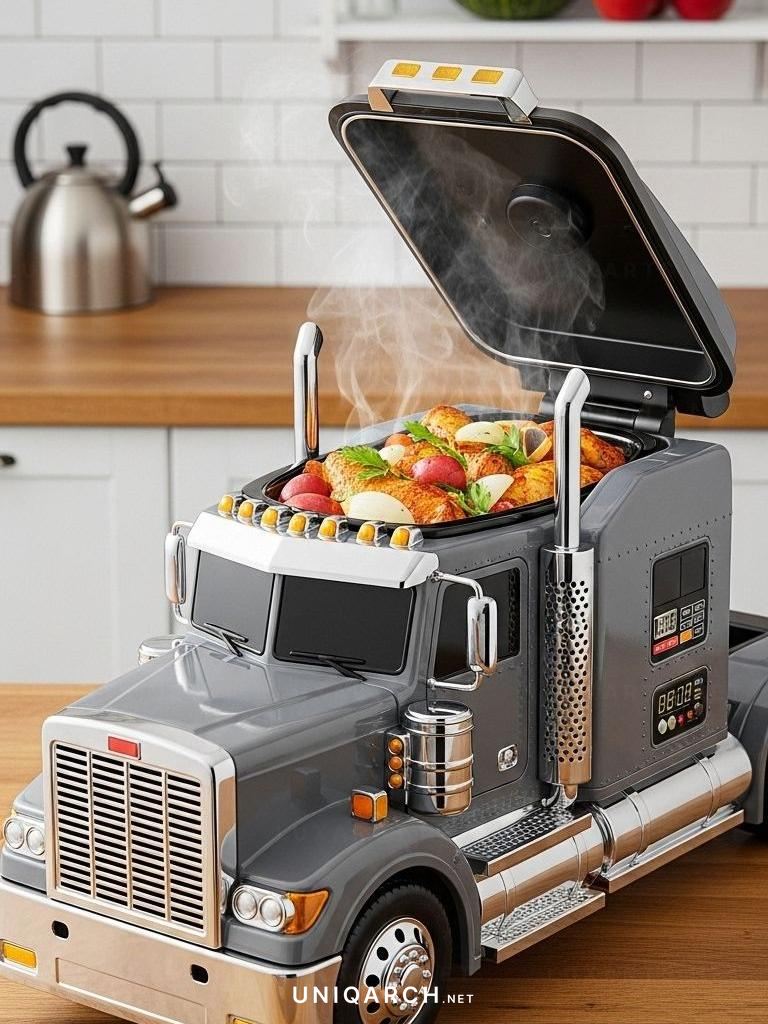
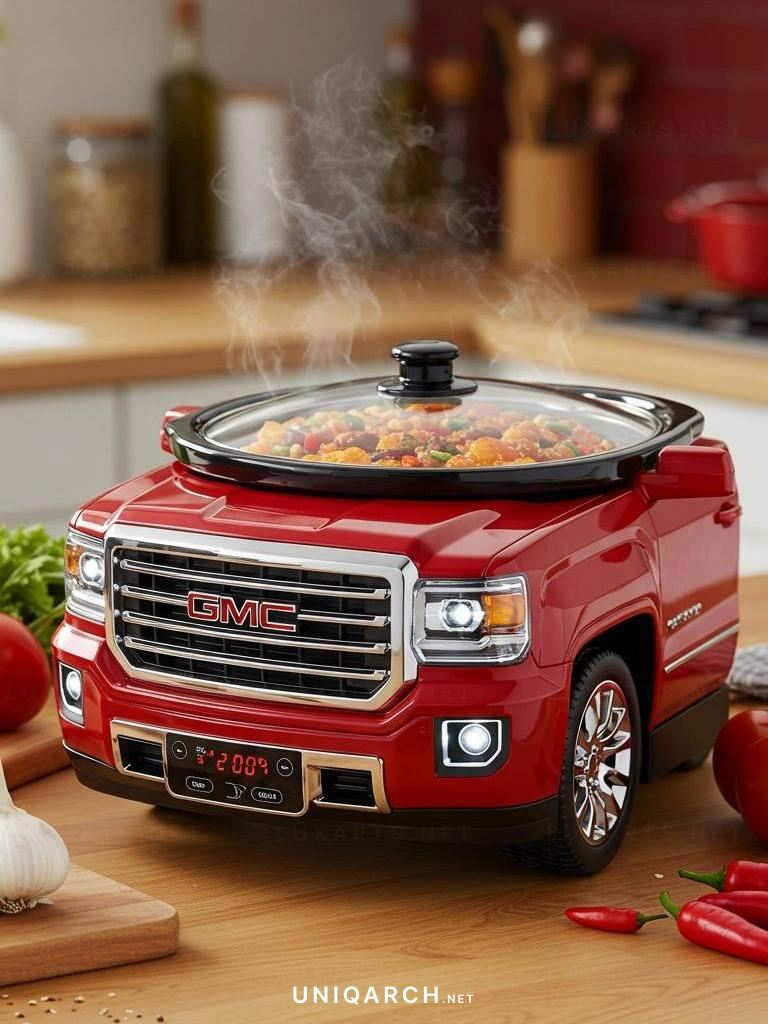
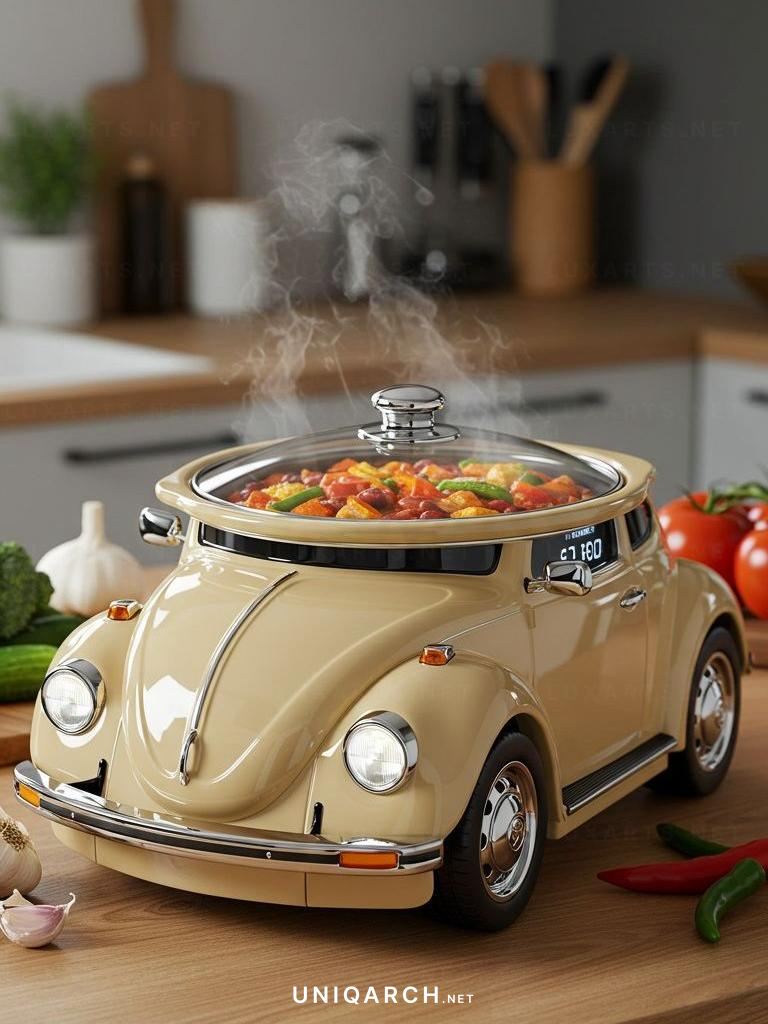
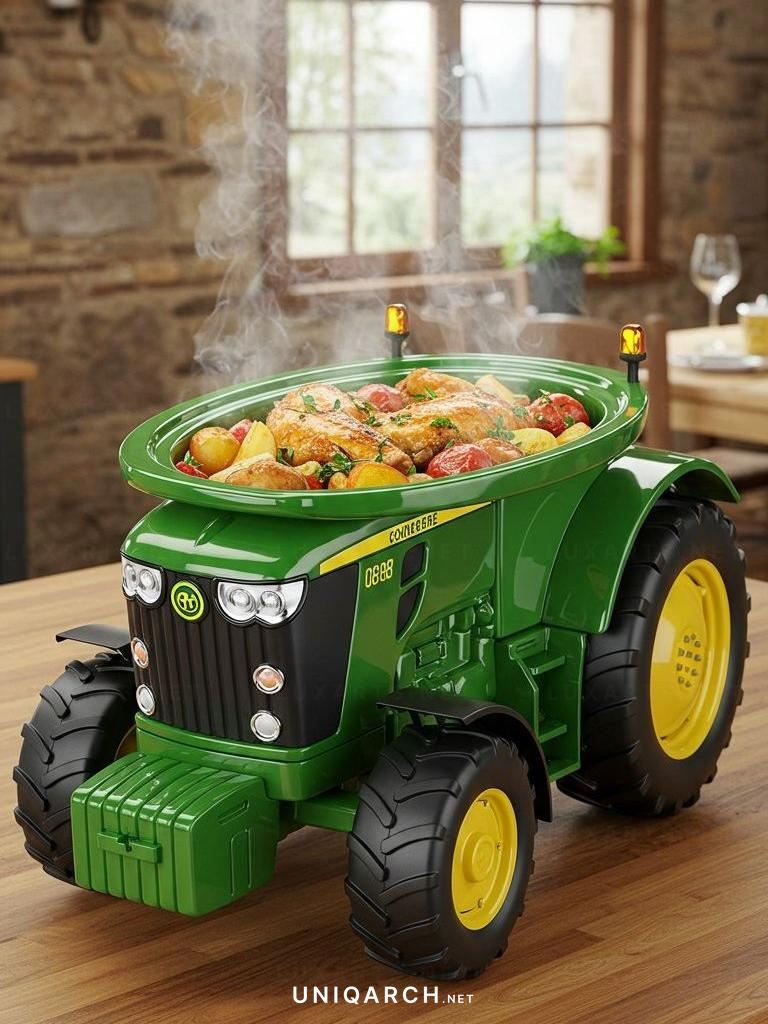
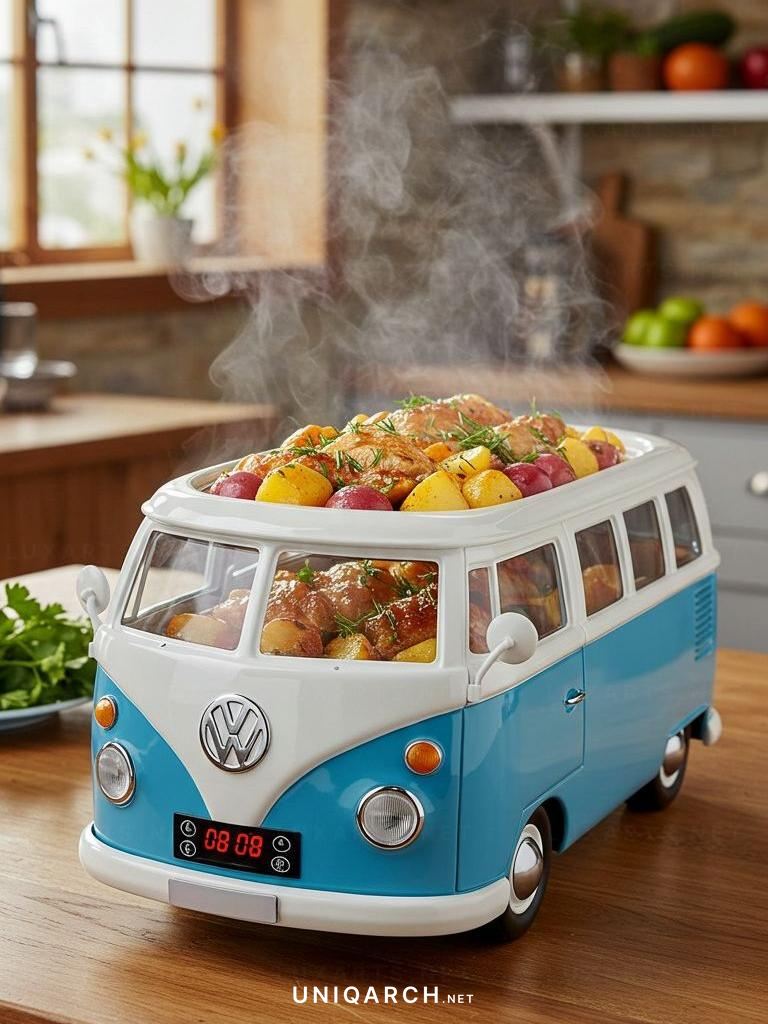
Vehicles have long symbolized freedom, engineering excellence, and personal identity. It is no surprise that automotive themes dominate the most striking slow cooker concepts. These designs translate the language of motion, craftsmanship, and cultural heritage into stationary kitchen companions. The vw bus slow cooker stands as a tribute to mid-century wanderlust. Inspired by the iconic Volkswagen Type 2, this concept features a two-tone pastel finish, rounded contours, and a glass lid that mimics the split windshield of the original van. Chrome accents trace the body lines, while subtle detailing like vintage-style dials and retro-inspired control knobs complete the nostalgic aesthetic. It evokes sunlit coastal drives, roadside diners, and the timeless spirit of adventure, turning a Tuesday evening stew into a journey. Equally charming is the vw beetle slow cooker. This concept captures the unmistakable silhouette of the original “Bug,” complete with sweeping fenders, circular headlight motifs, and a cream or pastel enamel finish. The curvature of the body isn’t just decorative; it’s ergonomically considered, offering easy grip points and intuitive lid placement. The design celebrates automotive history while proving that compact appliances can carry monumental character. For those drawn to American muscle, the mustang slow cooker delivers aggressive elegance. Drawing from the legacy of performance cars, this concept features sharp creases, a low-slung profile, and a matte or metallic finish that suggests speed even at rest. The control interface is seamlessly integrated into a dashboard-inspired panel, with tactile buttons and a minimalist display. It’s a design that appeals to enthusiasts who appreciate precision, power, and heritage, translating automotive engineering principles into culinary consistency. On the heavier side of the spectrum, semi truck slow cookers reimagine the kitchen staple as a rolling powerhouse. These concepts exaggerate proportion intentionally, featuring bold geometric lines, vertical chrome exhaust stacks, and a cabin-style lid that lifts like a truck’s sleeper berth. The front grille motif often doubles as a ventilation system, while reinforced bumpers and wheel-inspired base supports ground the design in industrial realism. Though purely conceptual, they highlight how scale and structural honesty can make an appliance feel substantial and purposeful. Pickup truck slow cookers bridge the gap between rugged utility and lifestyle design. These concepts often feature a bed-style rear section that houses the cooking vessel, complete with tailgate-inspired latches and textured finishes that suggest durability. Side mirrors, running board accents, and weather-resistant material simulations reinforce the outdoor-ready aesthetic. They appeal to those who view cooking as an extension of adventure, whether it’s a mountain cabin retreat or a backyard gathering. At the opposite end of the performance spectrum, supercar inspired slow cookers embrace aerodynamic elegance and high-tech minimalism. These concepts feature sweeping curves, active venting details, and vibrant color palettes that mimic exotic automotive liveries. The control panels often resemble digital instrument clusters, with touch-responsive surfaces and ambient lighting that shifts with cooking modes. While they prioritize visual drama, they also demonstrate how modern interface design can elevate user interaction, making temperature adjustments and timer settings feel intuitive and immersive.
Pop Culture & Novelty Designs: Beyond the Garage
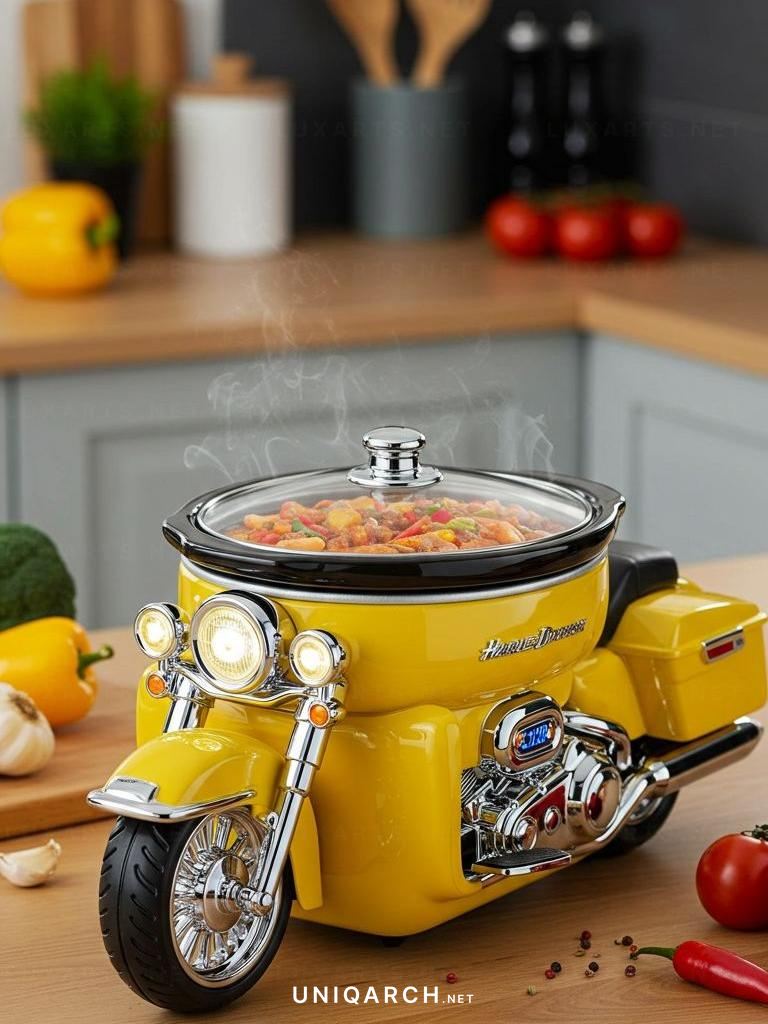
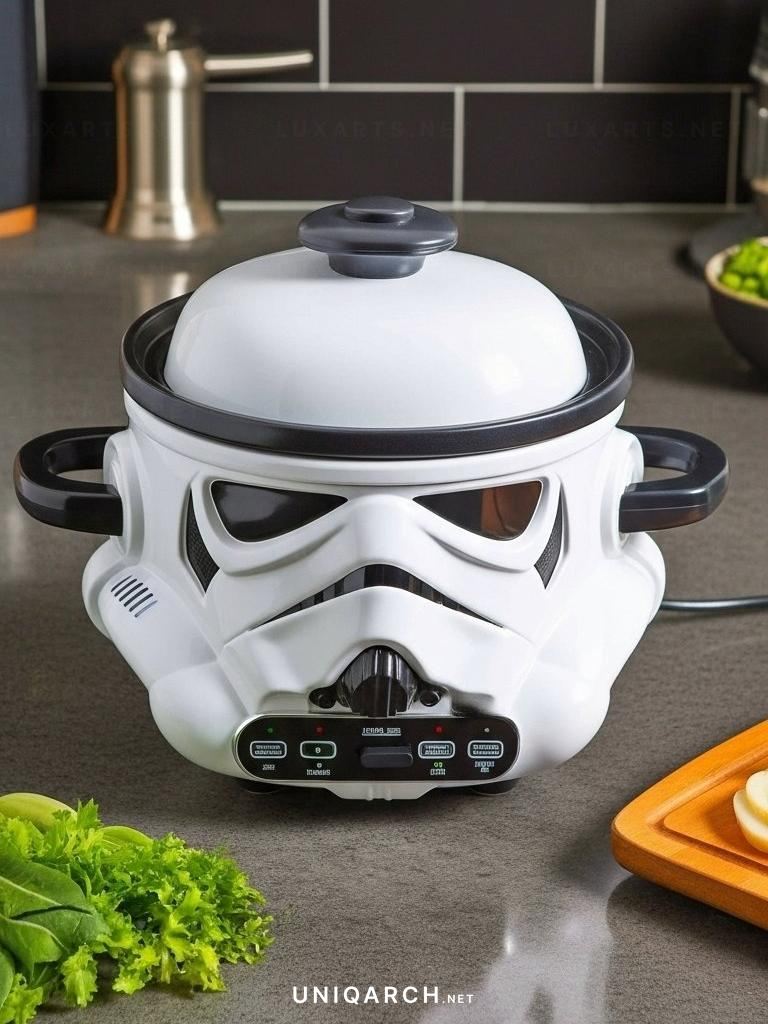
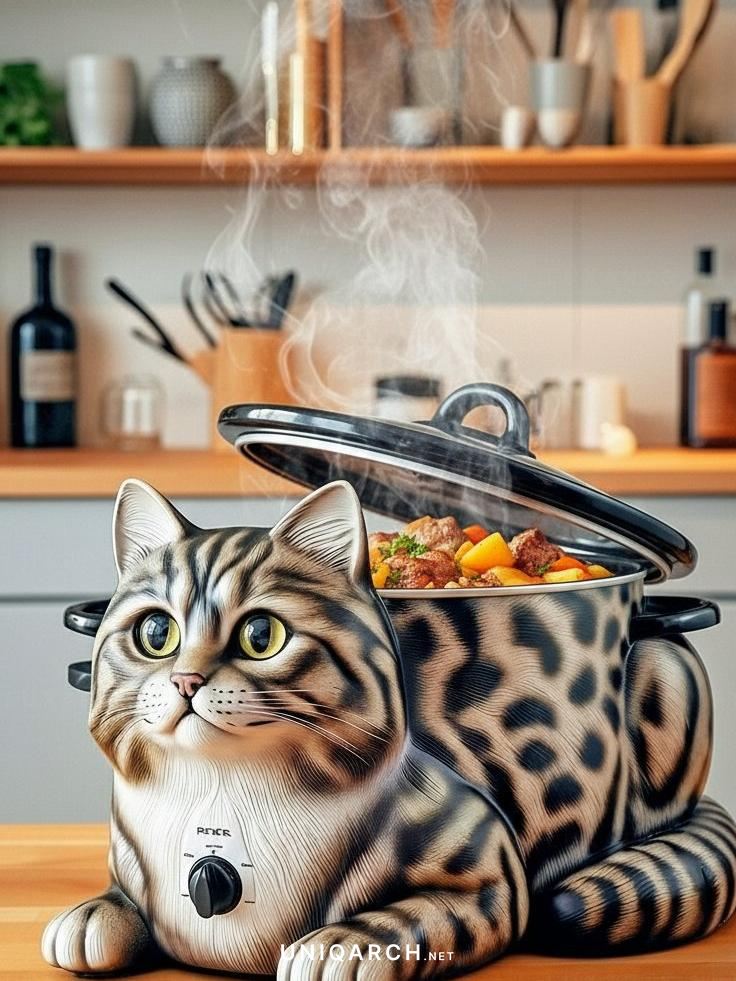
Not every themed slow cooker draws from automotive heritage. Some concepts tap into subcultures, humor, and everyday whimsy, proving that kitchen appliances can be playful, personal, and profoundly expressive. The harley slow cooker channels the spirit of American cruiser motorcycles. With a deep red or matte black finish, chrome handlebar-style grips, and saddlebag-inspired side compartments, this concept merges rebellion with refinement. The control panel is often positioned like a motorcycle dashboard, complete with analog-style gauges and toggle switches. It’s a design that speaks to freedom, craftsmanship, and the romance of the open road, bringing a sense of rugged sophistication to slow-simmered meals. For animal lovers, the cat slow cooker offers a softer, more tactile experience. This concept shapes the appliance around feline ergonomics: a rounded body that mimics a curled sleeping cat, ear-like lid handles, and subtle whisker etchings along the sides. The control interface might feature paw-print indicators or a minimalist dial shaped like a cat’s nose. Beyond its visual charm, the design emphasizes comfort and approachability, making cooking feel less like a chore and more like a gentle ritual. Then there are the toilet slow cookers, a category that leans into surreal humor and conceptual satire. These designs intentionally subvert kitchen norms, using familiar bathroom fixtures as unexpected culinary vessels. While clearly intended as artistic statements or novelty concepts, they serve a broader purpose: they challenge our assumptions about where beauty and functionality belong. By placing the absurd in the everyday, these designs spark conversation, encourage laughter, and remind us that kitchen culture doesn’t have to take itself too seriously.
Why Conceptual Design Reshapes Our Cooking Experience
The rise of themed slow cookers is about more than aesthetics. It reflects a deeper shift in how we interact with domestic spaces. Kitchens are no longer hidden workrooms; they are social hubs, creative studios, and extensions of our identities. When an appliance resonates with personal passion, it changes the emotional context of cooking. A meal prepared in a vw bus slow cooker isn’t just dinner; it’s a nod to vintage culture. A stew simmered in a harley slow cooker carries the weight of craftsmanship and independence. These concepts transform routine into ritual. Moreover, conceptual designs serve as innovation catalysts. Even when they remain artistic explorations, they push real-world manufacturers to consider modularity, material innovation, and user-centric interfaces. The exaggerated chrome details, integrated ventilation, and ergonomic grips seen in these concepts often trickle down into production models, proving that imagination has practical value. Designers use these themes to test how far form can stretch before compromising function, creating a feedback loop that benefits everyday consumers. It is also worth acknowledging the psychological comfort these appliances provide. In an era of digital overload and algorithm-driven living, tangible objects with narrative depth offer grounding. A slow cooker shaped like a classic car or a beloved animal becomes a tactile anchor, a reminder of hobbies, memories, and personal stories. Cooking becomes an act of curation, not just consumption.
Practical Considerations for Themed Appliances
While these slow cookers exist primarily as design concepts, their hypothetical integration into real kitchens raises important questions. How would intricate detailing affect cleaning? Would protruding elements compromise safety or counter space? Could thematic finishes withstand heat, moisture, and daily wear? Designers addressing these questions often prioritize seamless integration. Removable decorative panels, dishwasher-safe interior components, and heat-resistant coatings are common theoretical solutions. Ventilation is strategically placed to avoid interfering with aesthetic lines, and control interfaces are positioned for ergonomic access without disrupting visual flow. Even in conceptual form, these appliances demonstrate that creativity and practicality are not mutually exclusive. For homeowners drawn to themed design, the takeaway is clear: aesthetics should enhance, not hinder, usability. Whether selecting a production model inspired by these concepts or simply curating a kitchen that reflects personal taste, the goal remains balance. A well-designed appliance should feel like a natural extension of the space, complementing cabinetry, lighting, and daily routines.
The Future of Kitchen Expression
As design technology advances, the line between concept and reality will continue to blur. 3D printing, sustainable materials, and smart-home integration will enable even more personalized kitchen ecosystems. Themed slow cookers may soon feature customizable exterior panels, modular attachments, or app-synced lighting that matches cooking modes. The concepts we explore today are stepping stones toward a future where appliances are as adaptable as the people who use them. What remains constant is the human desire for meaning in the mundane. Cooking is one of the most universal acts, yet it is deeply personal. The slow cooker, with its promise of patience, transformation, and comfort, is the perfect vessel for this philosophy. When wrapped in the language of cars, animals, humor, or nostalgia, it becomes more than a tool. It becomes a conversation starter, a memory keeper, and a daily reminder that creativity belongs everywhere.
Conclusion
The world of slow cooking has expanded far beyond temperature settings and recipe timers. Unique slow cookers represent a new frontier where culinary function meets artistic vision. Whether it’s a vw bus slow cooker evoking coastal nostalgia, a harley slow cooker channeling open-road freedom, a vw beetle slow cooker celebrating vintage charm, or a whimsical cat slow cooker bringing gentle joy to meal prep, these concepts prove that kitchen appliances can be deeply personal. Semi truck slow cookers, pickup truck slow cookers, mustang slow cookers, supercar inspired slow cookers, and even toilet slow cookers each tell a different story, but they share a common purpose: to remind us that design matters, that passion belongs in the kitchen, and that cooking can be an act of self-expression. These themed concepts may not be available on store shelves, but their influence is already reshaping how we think about domestic tools. They challenge designers to dream bigger, encourage homeowners to curate intentionally, and invite all of us to find beauty in the everyday. The next time you lift the lid of your slow cooker, consider not just what’s inside, but what the appliance itself represents. Because in the modern kitchen, creativity isn’t just welcomed; it’s essential.